Enhanced bioproduction of phenolic compounds from Populus nigra L. using temporary immersion bioreactors and metabolomics
- Santé-Sciences-Technologie,
le 30 novembre 2025
Site Grandmont
Laffon M, Magot F, Birer Williams C, Michoux F, Lemoine C, Lanoue A and Giglioli-Guivarc’h N (2025) Enhanced bioproduction of phenolic compounds from Populus nigra L. using temporary immersion bioreactors and metabolomics. Front. Mol. Biosci. 12:1704160. doi: 10.3389/fmolb.2025.1704160
Abstract
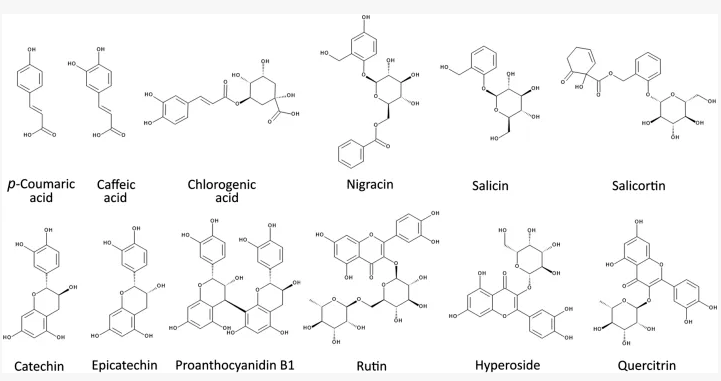
Black poplar is a woody species rich in bioactive phenolic compounds with promising pharmaceutical and cosmetic applications. In wild populations, genetic diversity and environmental variability affect phenolic content and bioactivities. Plant tissue culture, conducted under controlled conditions, offers a suitable alternative for industrial bioproduction. The aim of this study was the development of in vitro shoot cultures of black poplar in Magenta™ and RITA® systems for efficient and constant phenolic productivity. Following the initiation of in vitro lines, significant growth enhancement was achieved through selection of fast-growing lines. UPLC-QTOF-MS-based untargeted metabolomic analyses were carried out, and allowed the identification of flavan-3-ols, proanthocyanidins, flavonols and salicinoids. As a result, 32 compounds were described for the first time in P. nigra, including 15 metabolites previously identified in other Populus species and 17 additional compounds not yet identified in the Populus genus. The productivity of the major phenolic compounds was substantially higher in the RITA® system, showing a 2.6-fold increase compared to Magenta™. Targeted metabolomics followed by Principal Component Analysis were performed to study the metabolic changes during 8 weeks of culture in RITA® system, revealing that most metabolites accumulated during the three first weeks of growth. Optimal shoot growth and phenolic content were achieved in RITA® system after 3 weeks of culture. Finally, the effects of both SA and MeJa treatments were characterized by Orthogonal Partial Least Squares Discriminant Analysis (OPLS-DA) which identified metabolites with Variable Importance in Projection (VIP >1), notably flavan-3-ols and proanthocyanidins as biomarkers common to both elicitation treatments. In conclusion, in vitro shoot culture in RITA® system and metabolomics studies allowed to design a specific process for efficient bioproduction of black poplar bioactive phenolics.